Dabka Work — Coiled Wire Embroidery for Bridal Wear
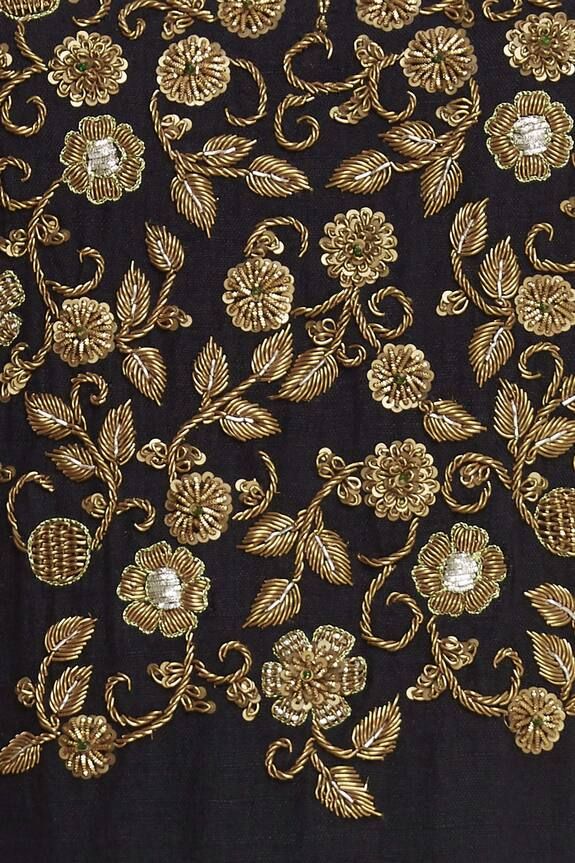
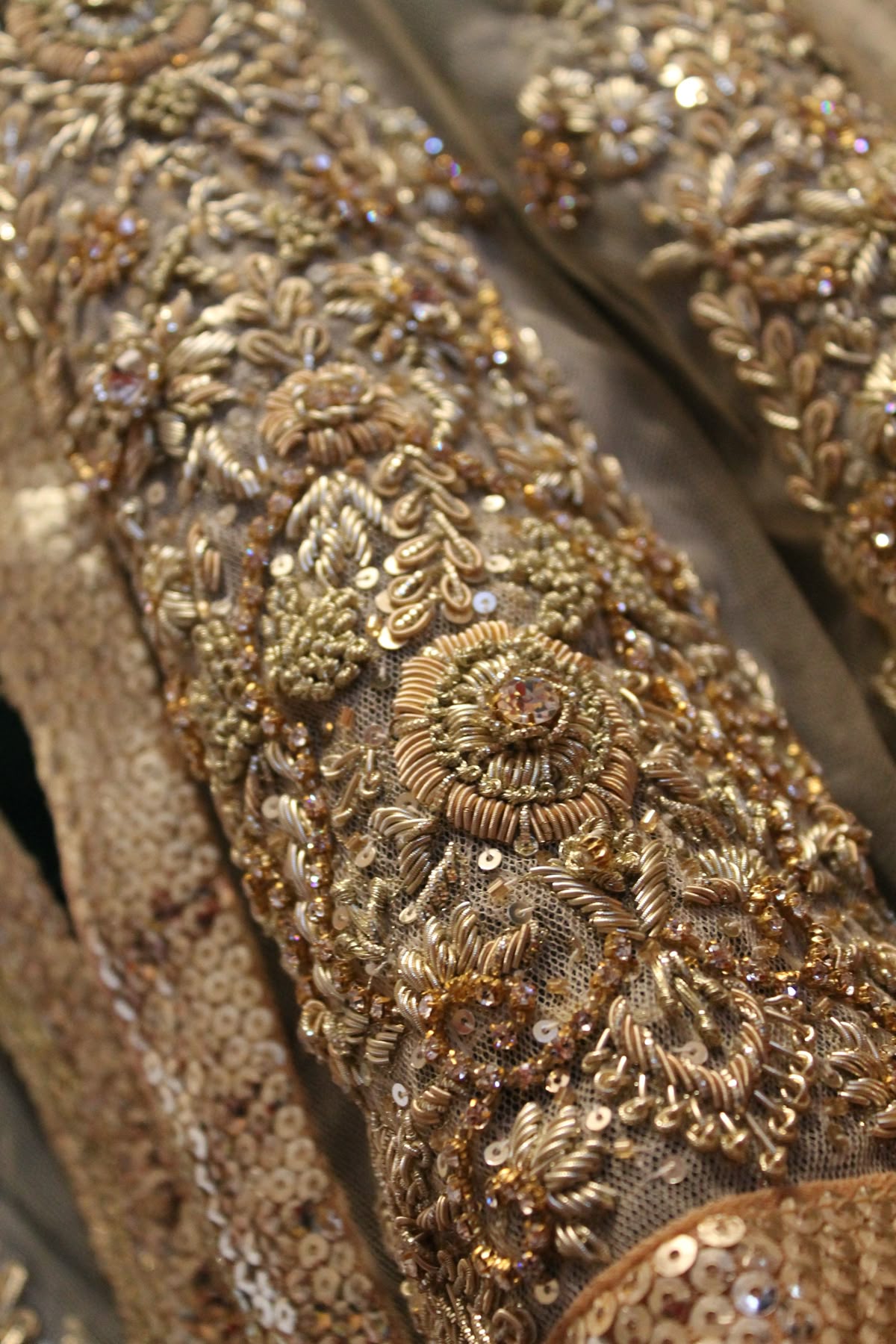
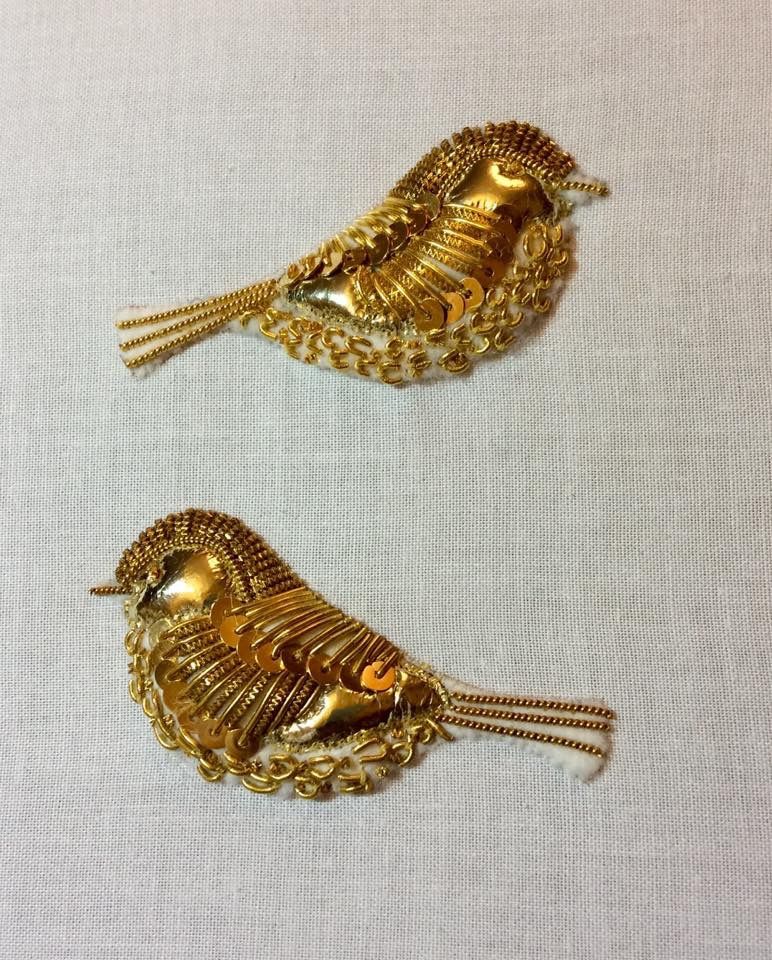
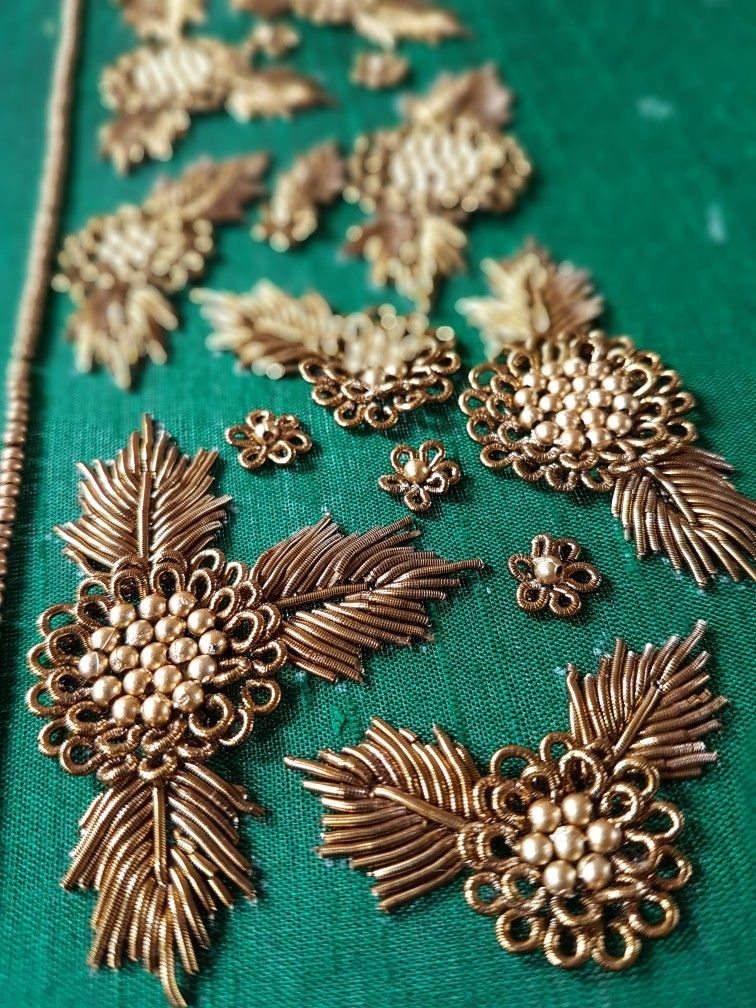
Dabka work uses coiled metallic wire in gold or silver to create raised, three-dimensional embroidery. The spring-like wire is bent and stitched to form intricate patterns that add luxurious texture and dimension to fabric. It's essential for achieving that distinctive 'heavy' bridal look.
Origin
Lucknow, India
Techniques
Dabka Coiling, French Knot with Dabka, Outline Work, Raised Motifs
Best For
Bridal Wear, Sherwanis, Saree Borders, Blouses, Dupattas
Turnaround
7-45 days (varies by complexity)
History & Heritage of Dabka Work
A refined subset of Zardozi, Dabka evolved in Lucknow's royal workshops where craftsmen experimented with different metallic materials. It became synonymous with opulent wedding attire and ceremonial garments.
Dabka Work FAQs
What is Dabka embroidery?
Dabka uses tightly coiled metallic wire (like a spring) that is cut and stitched onto fabric. It creates a raised, 3D textured effect that's bolder than flat Zardozi. Dabka is a staple of North Indian and Kashmiri bridal embroidery.
Dabka vs Zardozi — which is better for bridal?
Zardozi creates smooth, regal patterns while Dabka creates raised, sculptural textures. Most premium bridal lehengas combine both — Zardozi for the base pattern and Dabka for accent elements. Together they create the iconic heavy bridal look.